

This post may contain affiliate links. See disclosure for details.
A Sunday Roast Tradition: Our Family’s Favorite Prime Rib Recipe
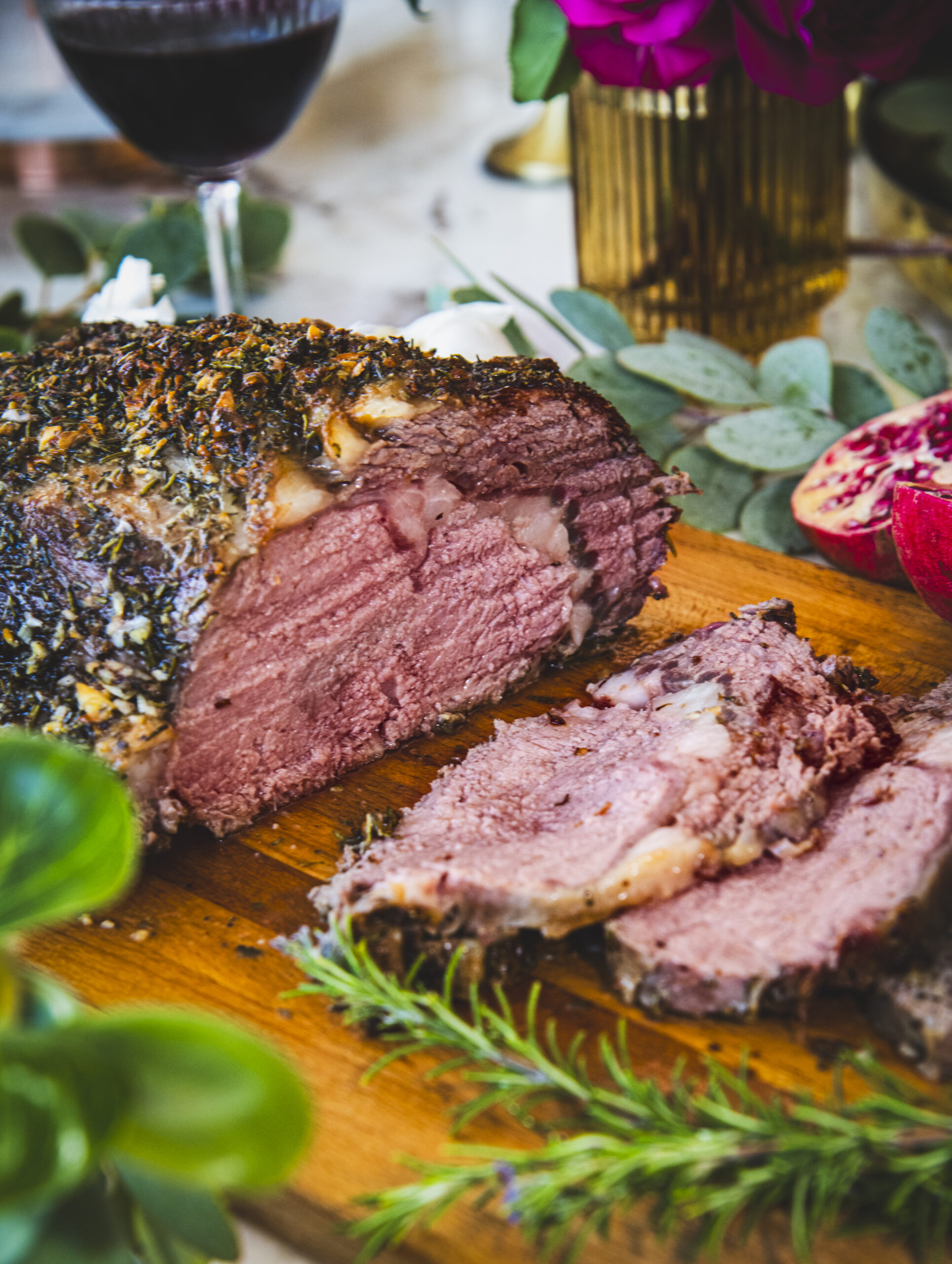
If there’s one thing my family can agree on, it’s that nothing beats a good roast beef—especially on Sundays. My husband, being British, is a die-hard fan of the traditional Sunday roast. And while Sundays are sacred for this meal, we take it up a notch for Christmas with a beautifully cooked ribeye roast. It’s become a family tradition that we look forward to every holiday season.
Why This Prime Rib Roast Is so Special?
What I love most about this prime rib recipe is that it’s incredibly simple yet feels so special. The combination of garlic and rosemary is perfection. Garlic enhances the savory richness of the beef, while rosemary—bold and fragrant—holds its own against the deep flavors of the meat. And when it comes to roasts, prime rib is my top pick—its marbling and tenderness deliver unbeatable flavor every time.
The Secret to Perfect Flavor: Searing the Meat
One of my golden rules for a perfect roast? Always sear the meat. Searing locks in the juices and creates that gorgeous, caramelized crust that adds a layer of flavor you just can’t get otherwise. Trust me, it’s worth the extra step.
Cooking Time and Temperature Tips
For cooking times, I’ve found that 12 minutes per pound works like a charm for a medium result, as that’s our family’s meat temperature preference. Of course, this depends on the size and cut of your roast, whether it’s boneless or bone-in. Bone-in tends to take longer to cook, so if you have a bone-in cut then 12 minutes per pounds will probably come out more medium rare. If you’re particular about your meat’s doneness (and who isn’t?), I recommend using a meat thermometer to ensure a more accurate temperature of the meat.
Keep in mind that the roast will continue to cook while resting, increasing in temperature by about 5-10 degrees. To play it safe, factor in that 10-degree rise.
Don’t Skip the Resting Step!
Speaking of resting—this might be the most crucial step of all! Once your roast comes out of the oven, let it rest. I know it’s tempting to slice right in, but resist! Allowing the meat to rest lets all those flavorful juices redistribute. If you carve it too soon, you’ll lose all that wonderful moisture.
A Roast Worth Celebrating
This recipe is a staple in our home for a reason: it’s easy, impressive, and always delivers. Whether it’s a cozy Sunday meal or a festive Christmas dinner, a good ribeye roast has a way of bringing everyone together.
Rosemary and Garlic Prime Rib
Ingredients
Ingredients:
- 8 lbs prime rib, bone-in
- kosher salt
- black pepper
- ¼ cup avocado oil or any neutral cooking oil
Rub:
- ½ cup fresh rosemary, chopped
- ½ cup garlic, chopped
- ¼ cup olive oil
- 1 Tbsp au jus dry powder mix
Instructions
- Preheat oven to 300 degrees, ideally on roast instead of bake setting in the oven.
- Ideally you want to bring the meat to room temperature which will take at least 2-3 hours.
- Score the fat.
- Season the prime rib with salt and pepper.
- Mix the chopped rosemary, garlic, au jus powder mix and olive oil together to form an oil rub. Set aside.
- In a large cast iron skillet or oven proof pan on medium heat, add avocado oil and sear meat fat side down first, and then on all sides for around 3 minutes per side.
- Remove skillet from heat.
- Rub the herb garlic mix all over the prime rib.
- Place the skillet with the prime rib in the oven and a meat thermometer inserted in the middle of the meat. Cook until your desired temperature, but note that the temperature will go up by 10-15 degrees after removing it, so make sure you factor that in. Let it rest at least 30 minutes if not longer. A rough approximation is around 15 minutes per pound, but it’s best to use a meat thermometer, and the reason being is it all depends on how cold your meat is when you begin cooking it.
- Remove prime rib from skillet. Let it rest for at least 30-45 minutes before carving. You do this to make the juice stay in the rib. The longer you let it rest the better.
- My recommendation is to pull out the meat when it reaches 120 degrees and lightly cover with an aluminum foil tent and it should reach to just under medium. Pull it out at 125 degrees if you want more of a medium. It’s really hard to determine as every meat is going to rise by different degrees so always best to use a thermometer and always best to factor in close to 10 degrees of heat rising and whatever that end temperature you want it to be. If you feel like your temperature is not rising that quickly and it’s at a snail’s pace to get to your desired temperature then cover with aluminum foil to have the temperature rise more.
Nutrition
Did you make this recipe? Give it a star rating below!